
HEROIN REHAB: TIMELINE & LEVELS OF CARE
Finding HEROIN REHAB AND Treatment
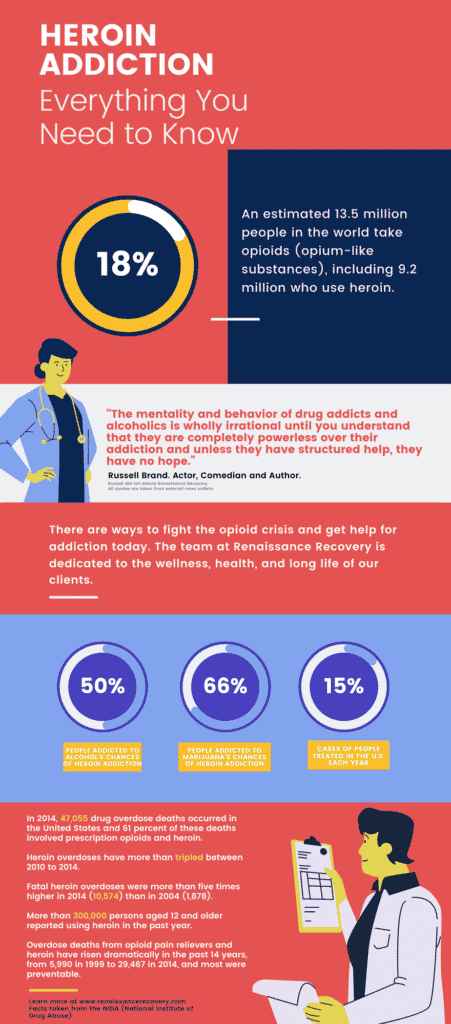
Close to half a million people reported using heroin in 2017, and the number may be even higher now. With the many dangers of using this substance, it’s not surprising that approximately 15,482 people died from a heroin overdose in that same year. Luckily, heroin rehab in Southern California can help people overcome this deadly drug.
Levels of Care for Heroin Addiction
For those in the Los Angeles metropolitan area and near Orange County, Renaissance Recovery is a California recovery center that provides resources and rehab help for those in need.
Not every client can admit to an intensive outpatient program. The levels of care depend on the severity of withdrawal symptoms, length of substance abuse, and when the last time you used the substance. Below we are going to outline the levels of care for you.
Heroin Addiction treatment typically occurs in the following levels of care:
- Heroin Detox Program
- Heroin Inpatient / Residential
- Heroin PHP
- Heroin IOP
See our drop down tabs below for more detailed description of the levels of care for heroin addiction treament.

Signs of a Heroin Overdose
Before a heroin overdose occurs, there are certain signs you can look for to ensure you or your loved one gets to medical intervention before it’s too late.
Some common signs of heroin overdose include:
- Slow or shallow breathing
- Feeling disoriented
- Blue lips and nails
- Tiny pupils
- Feeling nauseous
- Drawn or pale skin
- Discolored tongue
- Slow or weak pulse
If someone you know is showing overdose symptoms call 9-1-1 immediately. The very early stages are confusion and disorientation, pupils being to dilate, shallow breathing, a discolored tongue or weak pulse can all be present as well. The critical danger comes with the later symptoms. Someone will have a significant problem breathing and their pulse begins to weaken. Call 9-1-1 immediately.
Learn more about the progression of a heroin overdose here.
Heroin Addiction Symptoms
There are many different heroin treatment options. Heroin is a hazardous drug with a high potential for addiction. If you or someone you care about are suffering from heroin addiction, admission into a heroin addiction treatment center in Orange County is the first step towards lasting heroin addiction recovery. At Renaissance Recovery Center, we offer a range of addiction treatment programs and addiction therapy services in Orange County, CA.
Upon your admission into our heroin addiction treatment center, the addiction treatment staff will conduct a mental health assessment to determine the unique underlying mental health conditions that contribute to your heroin addiction. At our heroin addiction treatment center, you will learn valuable coping skills to avoid turning to heroin in times of distress, in addition to overcoming the physical symptoms of heroin addiction.
Heroin Rehab – Los Angeles
One of the most important aspects of the heroin addiction treatment process is detox. It is vital to ensure that if you or a loved one has a heroin addiction that you can safely flush the drugs from your system, this is best done at a professional treatment center.
At Renaissance Recovery, we can set you up with a verified and professional heroin detox in Orange County or a Los Angeles heroin detox that we are partnered with. From there you can begin the treatment process.
If you are interested in learning more about our heroin treatment program, you may be wondering if your insurance will cover the cost of treatment. Call today to learn more about heroin detox – Los Angeles .
Is Heroin Rehab Covered by Insurance?
If you or a loved one is dealing with a heroin problem and need to better understand how you’re going to pay for heroin treatment centers, there are options available to help you afford rehab. For example, at Renaissance Recovery, our heroin treatment program takes numerous different types of insurance policies including Aetna, BCBS, Beacon, and more.
To learn more about coverage for your specific situation and get a better understanding of what you might be in for during treatment, please reach out to our team today and get more specific information for the best rehab for heroin addiction covered by insurance.

Fight Back Against Heroin Addiction
Get evidence-based treatment to overcome heroin addiction at Renaissance Recovery. Call our team now to learn more about the process.
Renaissance Recovery’s Southern California Heroin Rehab
Life at a heroin addiction treatment center consists of a structured schedule of daily addiction treatment programs and addiction therapies that help you develop the skills necessary to adjust to normal life after successful heroin addiction treatment. You will spend time with a certified professional therapist as well as group therapy with peers that are determined to turn their life around by overcoming heroin addiction.
At our treatment center’s Southern California location, our experienced therapists are ready to walk with you on this journey. Our goal is to get you to a healthy, happy future, which starts at our heroin addiction treatment center in Orange County, CA.
Renaissance differs ourselves from other treatment centers because our community is family. Orange County, California is the hub for treatment centers. It has one of the largest recovery communities in the U.S. Bonding with people who are going through the same things as you is a core aspect of the journey to recovery. Please take some time today to reach out to our heroin rehab in Southern California and learn about the various heroin treatment options.